
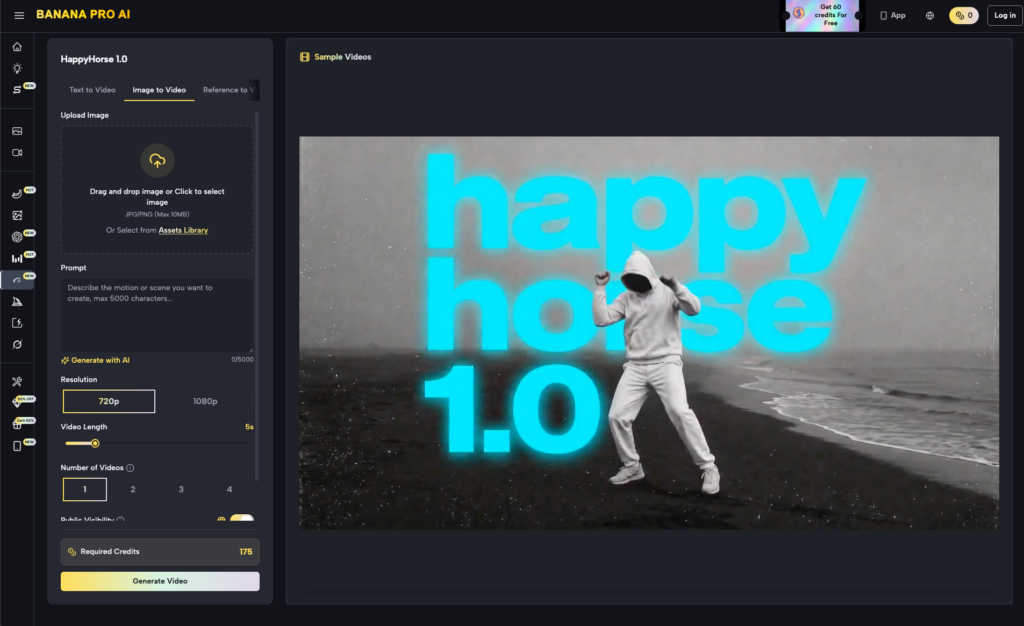
The common trap in generative media production is the pursuit of the “masterpiece.” For most indie makers and performance marketers, the bottleneck isn’t the lack of a perfect, ultra-high-resolution image; it is the latency between an idea and a testable asset. When a marketing team spends forty minutes refining a single prompt on a high-parameter model to get a hyper-realistic result, they have effectively paralyzed their creative throughput. In the time it takes to produce that one “perfect” hero image, the market may have already moved, or the ad budget could have been better spent testing five different visual directions.
This is the efficiency paradox: as AI models become more complex and computationally heavy, the friction of generating volume increases. For those operating at the intersection of rapid growth and limited resources, the goal isn’t necessarily higher fidelity—it is higher velocity. Shifting the focus from singular quality to iterative speed allows a creator to treat visual assets as disposable experiments rather than precious art. By utilizing optimized models like Nano Banana, creators can bypass the rendering wait times that typically stall a brainstorming session, moving directly into the “vibe-check” phase of production where the real decisions are made.
The Friction of High-Frequency Asset Production
High-frequency asset production is a game of volume. Whether you are running a dozen Meta ad sets or trying to populate a week’s worth of social content, the primary constraint is the fatigue of the creator. When there is a two-minute lag between clicking “generate” and seeing a result, the psychological flow state is broken. Small marketing teams often hit an “Asset Fatigue” threshold where they settle for “good enough” early in the process simply because the iteration cycle is too punishing.
In a professional setting, repeatability is often more valuable than a singular moment of brilliance. If a prompt works once but takes three minutes to render and fails four out of five times, it is a liability in a production pipeline. The current AI ecosystem, particularly the tools used by performance marketers, is beginning to value models that offer a high “hit rate” at low latency. This is where the choice of a specific Banana AI model becomes a tactical decision rather than an aesthetic one.
Model Selection as a Tactical Decision
Not every image needs the heavy lifting of a billion-parameter model. In the same way a developer uses a lightweight text editor for a quick script but an IDE for a complex project, a creator should match their model to the task. Use cases like social media story backgrounds, placeholder assets for landing pages, or variation testing for display ads do not require the computational overhead of high-fidelity cinematic models.
The logic behind choosing Nano Banana is rooted in reducing generation latency. By selecting an optimized model, the creator prioritizes the ability to see ten viable variations in the time it would take to see one from a larger model. This “speed-first” approach is particularly effective during the early stages of a campaign when you are still trying to define the visual language. It allows for a rapid exploration of color palettes, compositions, and subject matter without a significant investment in time or credits.
However, it is worth noting a limitation here: lightweight models often trade off specific fine-grained details for this speed. If your asset requires intricate, legible text or complex anatomical precision, a faster model might require more “in-painting” or post-processing later. The trick is knowing when to use the fast model for discovery and when to switch to a more robust Banana Pro model for the final export.
The Canvas as a Control Layer
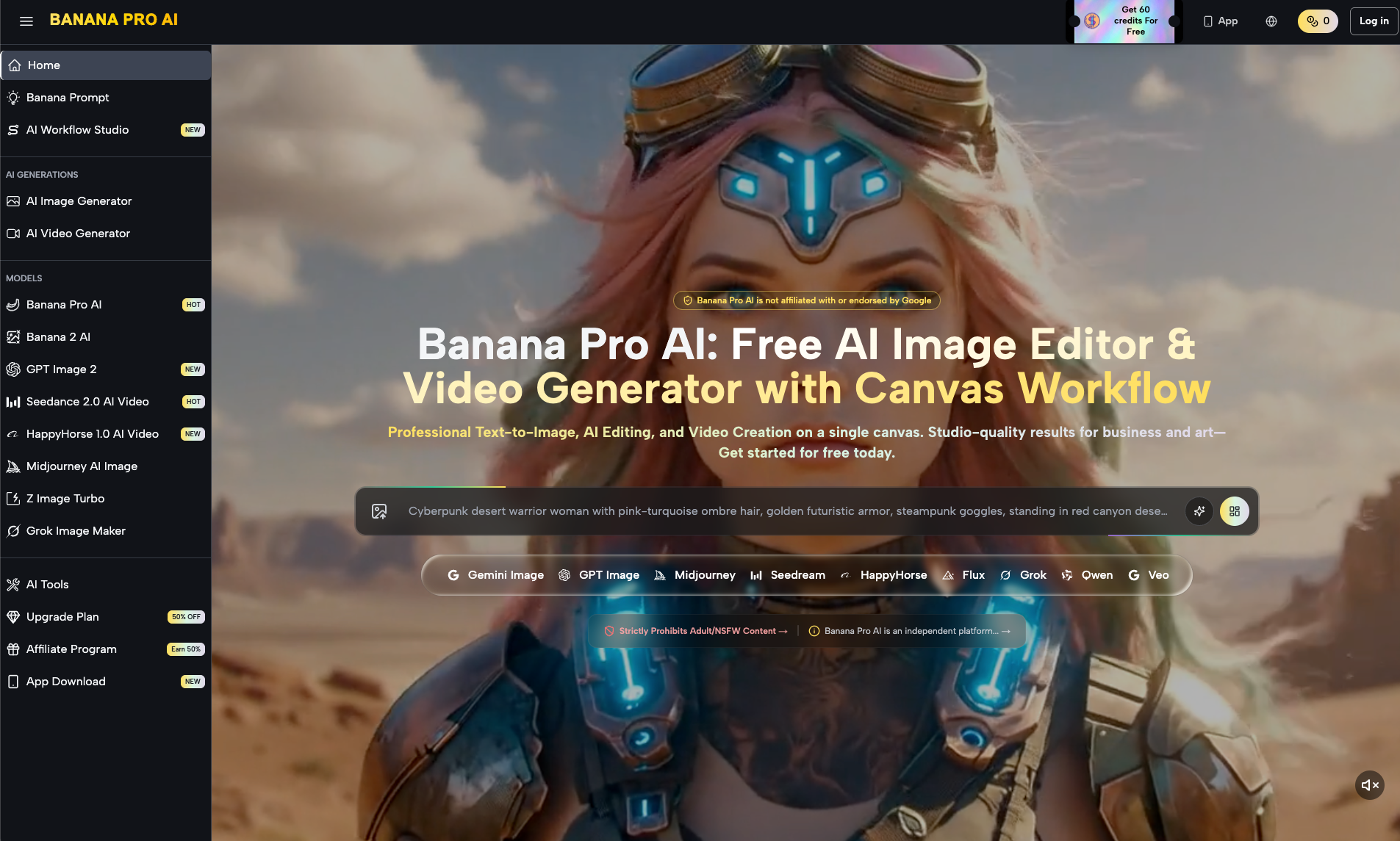
Production speed isn’t just about the model; it’s about the environment where the generation happens. The traditional “prompt-and-pray” method—where you type a text string and hope for the best—is being replaced by more structured workflows. Within the Banana Pro AI ecosystem, the Workflow Studio and the unified canvas act as the control layer that prevents a project from becoming a cluttered mess of random files.
A unified canvas allows a creator to perform image-to-image transformations and edits without switching tabs or software. For an indie maker, this means you can take a basic screenshot of a product wireframe, run it through an AI Photo Editor process to add stylistic elements, and then immediately generate a background that matches the lighting. This level of integration reduces the “context switching” tax that kills productivity.
By using the canvas as a staging area, you can maintain brand consistency across different social assets. You can keep your primary subject on one layer while iterating on the background or surrounding elements using different seeds. This structured approach ensures that while you are generating at high speed, you aren’t sacrificing the visual cohesion of the campaign.
Operationalizing Social and Landing Page Assets
When it comes to landing page support, the bottleneck is often the hero section. Most creators spend too long searching for the perfect stock photo. Instead, an operator-led workflow involves using Banana Pro to generate a series of “vibes” based on the brand’s core keywords. Because the generation is near-instant, you can live-test how a visual looks behind a headline in real-time.
For performance marketers, A/B testing is the lifeblood of a successful campaign. The ability to generate five variations of a person holding a product, each with a different environmental background (e.g., an office, a park, a futuristic lab), allows for a much broader testing surface. If one specific environment correlates with a higher click-through rate, you can then double down on that aesthetic.
This is where the utility of the tool shines:
- Rapid Prototyping: Moving from a rough sketch or text idea to a visual asset in under thirty seconds.
- Scale: Generating forty variations for a programmatic ad campaign without hitting a processing wall.
- Consistency: Using specific model settings to ensure the “look” of the brand doesn’t drift during high-volume periods.
Practical Constraints and the Limits of Speed
While the efficiency gains are undeniable, there are moments of uncertainty that every creator must acknowledge. One significant limitation of lightweight models is their struggle with complex spatial reasoning. If you prompt for “a cat sitting on a blue box next to a red ball,” a faster model might occasionally swap the colors or misplace the objects. This is where the human-in-the-loop becomes essential. You cannot yet fully automate the “quality control” phase of high-velocity creation.
There is also an ongoing debate about the long-term impact of AI-native aesthetic saturation. As more brands use the same underlying models for their social assets, there is a risk of “visual fatigue” among consumers. We do not yet have enough long-term data to conclude if AI-generated assets will maintain their current performance levels or if they will eventually suffer from the same “banner blindness” that affected traditional stock photography.
Ultimately, the goal of using a tool like Banana Pro AI is to bridge the gap between imagination and execution. It is about removing the technical and temporal barriers that stop a creator from trying one more idea. By embracing an optimized, speed-oriented workflow, marketers can move away from the “masterpiece” mindset and toward a data-driven, iterative process that actually moves the needle in a crowded digital landscape. The efficiency paradox is solved not by making the AI smarter, but by making the human faster.